How to Reduce No-Shows at Your Pet Grooming or Boarding Business
If you run a pet grooming salon, boarding kennel, or daycare, you've felt the sting of a no-show. You blocked out time, maybe turned away another customer, and then... nothing. No call, no text, just an empty appointment slot and lost revenue.
Industry data suggests that pet businesses lose anywhere from 5% to 15% of their bookings to no-shows. For a busy grooming salon doing 20 appointments a week, that's one to three empty slots — potentially hundreds of dollars in lost revenue every single week.
The good news? No-shows are largely preventable. Here are the strategies that work.
1. Send Automated Reminders
This is the single most effective thing you can do. A reminder sent 24 hours before the appointment reduces no-shows by up to 40%, according to studies across service industries. A second reminder on the morning of the appointment can push that even further.
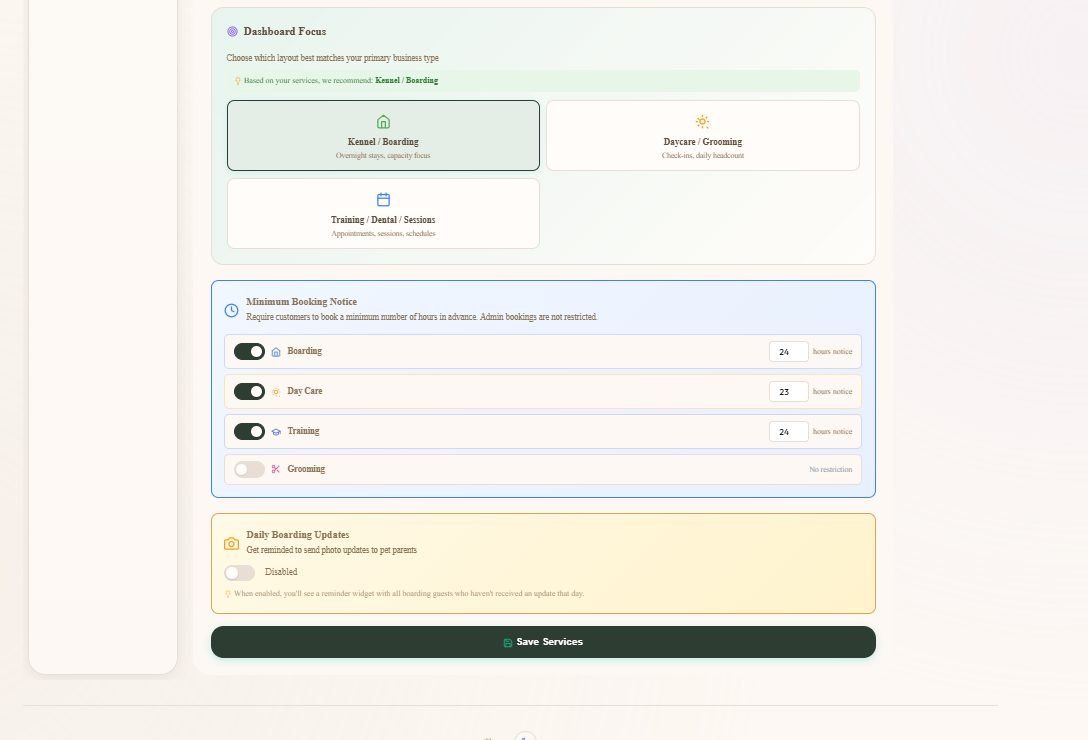
The key is automation. If you're manually texting or calling every customer the day before, you're spending hours on something that software can do in the background. Most modern booking platforms — including BooknBuddy — send automated reminders via email and push notifications without you doing anything.
The best reminders include the appointment details (date, time, service, pet name) and a clear way to cancel or reschedule if needed. Making it easy to cancel might seem counterintuitive, but a proper cancellation is infinitely better than a no-show because you can fill the slot.
2. Collect Deposits at Booking
Nothing motivates someone to show up like having money on the line. Collecting a deposit — even a small one like $10 or $20 — creates commitment. The customer has already invested in the appointment, making them far less likely to blow it off.

For boarding, deposits are standard practice and most customers expect them. For grooming and daycare, deposits are becoming more common as businesses realize the cost of empty slots. Frame it positively: "A $15 deposit secures your appointment time and is applied to your total." Most customers understand and appreciate that it keeps things fair.
The trick is making the deposit process frictionless. If a customer has to call in to pay, you've added a barrier. Online payment at the time of booking is the way to go — they book, they pay, it's done.
3. Implement a Clear Cancellation Policy
A cancellation policy only works if customers know about it before they book. Make it visible on your booking page, include it in the confirmation email, and reference it in your reminders. Something like:
"We require 24 hours notice for cancellations. Late cancellations or no-shows may be charged a fee equal to 50% of the service cost."
Will you actually charge every no-show? That's your call. Some businesses use the policy as a deterrent and only enforce it for repeat offenders. Others apply it consistently. Either way, having the policy in writing gives you the option and sets expectations.
4. Make Booking and Rescheduling Easy
Here's something most pet businesses don't consider: a significant chunk of no-shows aren't deliberate. The customer meant to reschedule but forgot. Or they wanted to cancel but couldn't reach you. Or something came up and by the time they remembered, it was too late to call.
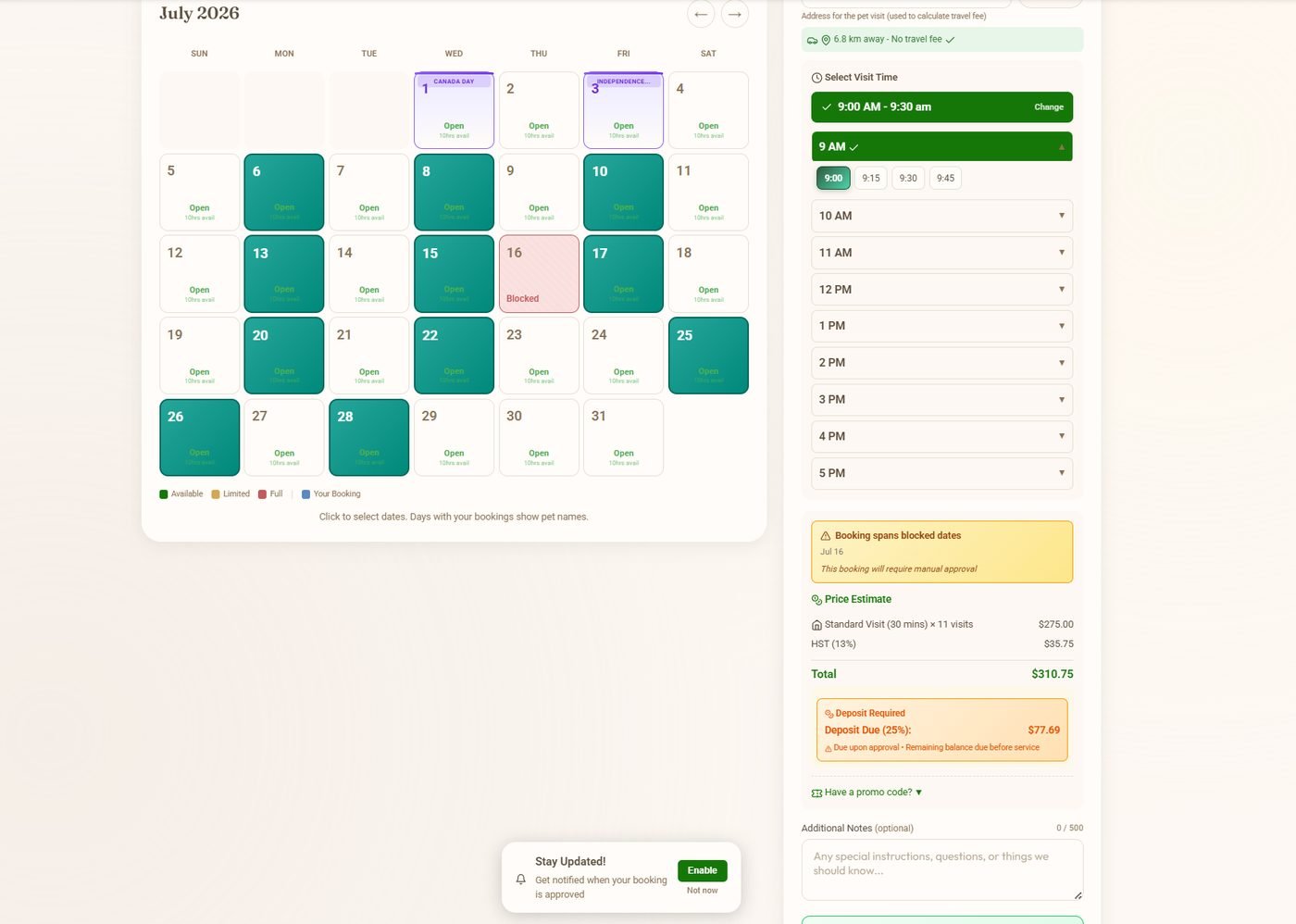
An online booking system where customers can reschedule or cancel with a few taps on their phone eliminates this problem. They get the reminder, realize they can't make it, and immediately reschedule — all without a phone call. You get notified, the slot opens up, and another customer can grab it.
5. Build Relationships, Not Just Transactions
Customers are less likely to no-show on someone they have a relationship with. It's easy to ghost a faceless booking system. It's much harder to skip out when you know Sarah is expecting you and has already prepped the grooming table for your goldendoodle.
This is where the human touch still matters. Learn your regulars' names (and their pets' names). Send a follow-up after their visit. Wish their dog a happy birthday. These small things build loyalty and respect, which translates directly into fewer no-shows.
Technology can help here too. A customer portal where pet parents see their booking history, their pet's records, and feel like they're part of your community creates a stronger connection than a simple appointment confirmation.
6. Track Your No-Show Patterns
Before you can fix the problem, you need to measure it. Track which days of the week have the most no-shows. Track which services are affected most. Track whether certain customers are repeat offenders.
You might discover that Monday mornings have twice the no-show rate of other days. Or that new customers are more likely to no-show than regulars. Or that grooming appointments get more no-shows than boarding (probably because there's no pet to drop off as a forcing function).
Once you see the patterns, you can target your efforts. Maybe Monday mornings get an extra reminder. Maybe new customers require a deposit while regulars don't. Maybe you overbook grooming by 10% on historically problematic days.
Automated reminders, deposits, and more
BooknBuddy sends booking reminders automatically, collects deposits online, and helps you fill empty slots fast.
Start Free Trial →The Math That Should Convince You
Let's say you average $60 per grooming appointment and do 25 a week. If 10% are no-shows, that's 2.5 empty slots per week, or $150 in lost revenue. Over a year, that's nearly $8,000. Even reducing your no-show rate by half — from 10% to 5% — puts an extra $4,000 in your pocket annually.
The investment in a booking system that sends automated reminders and collects deposits pays for itself many times over. Most platforms cost between $30 and $100 per month — a fraction of what no-shows are costing you.
Start Today
You don't need to implement everything at once. Start with automated reminders — that alone will make a noticeable difference within weeks. Then add deposits for your highest-value services. Then refine your cancellation policy. Each step reduces your no-show rate and increases your revenue.
The pet businesses that thrive aren't necessarily the ones with the fanciest facilities. They're the ones that run a tight operation, respect their own time, and make it easy for customers to do the right thing.
Related reading
- How to manage a dog daycare business — capacity, scheduling and retention
- How to price dog grooming services — no-show and matting fees, with a sample policy
- Best dog grooming software in 2026 — coat-based pricing and groomer scheduling
- Best pet boarding software in 2026 — the six features that actually matter