How to Start a Dog Boarding Business in 2026: A Practical Guide
The pet care industry is booming. Pet owners are spending more than ever on their animals, and the demand for reliable boarding, daycare, and grooming services continues to climb year after year. If you love working with animals and have been thinking about turning that passion into a business, dog boarding is one of the most accessible ways to do it.
But loving dogs and running a profitable boarding business are two very different things. This guide walks you through the practical steps — from the initial planning to getting your first paying customer — without the fluff.
Step 1: Decide What Kind of Boarding Business You Want
Before you do anything else, you need to figure out what model fits your situation. There are several approaches, and each has different startup costs, space requirements, and earning potential.
Home-Based Boarding
You board dogs in your own home. This is the lowest-cost way to start — no commercial lease, no build-out, just your house and a few dogs. Many successful boarding businesses started exactly this way. The downside is capacity. You're limited by your space and local regulations, which often cap the number of animals you can board at home.
Kennel-Based Facility
A dedicated facility with individual kennels or suites. This is the traditional model and allows you to board more dogs, but it requires significant upfront investment in a location, build-out, and equipment. Expect to spend anywhere from $50,000 to $300,000+ depending on your area and scale.
Cage-Free / Luxury Boarding
An increasingly popular model where dogs roam in supervised groups rather than staying in individual kennels. This appeals to pet parents who want a more "home-like" experience for their dog. It requires excellent staff and strong temperament screening, but can command premium pricing.
Daycare + Boarding Combination
Many of the most successful pet businesses combine daytime daycare with overnight boarding. This maximizes your space and revenue — the same facility generates income during the day and at night. It's more operationally complex, but it's also more resilient as a business model.
Step 2: Research Your Local Market
Before spending a dollar, you need to answer one question: is there enough demand in your area to support another boarding business?
Start by searching Google for boarding and daycare facilities near you. Look at their reviews — are they full? Do customers complain about availability? That's a sign of unmet demand. Check their pricing to understand the going rate. Talk to pet owners at your local dog park and ask where they board their dogs and what they wish was better.
You're also looking for gaps. Maybe your area has plenty of basic kennel boarding but no cage-free options. Maybe existing facilities don't offer daycare. Maybe they're all expensive and there's room for a mid-range option. The businesses that succeed are the ones that fill a gap rather than just copying what already exists.
Step 3: Handle the Legal Stuff
This isn't the exciting part, but skipping it can shut you down fast. The legal requirements vary significantly by location, so check with your local government office. At a minimum, you'll likely need:
- Business registration — Register as an LLC or corporation. An LLC is most common for pet businesses because it protects your personal assets.
- Zoning clearance — Make sure your location is zoned for a pet boarding operation. This is especially important for home-based businesses.
- Business license and permits — Your city or county will have specific requirements. Some areas require a kennel license above a certain number of animals.
- Liability insurance — Non-negotiable. Dogs can get injured, they can injure each other, and things can go wrong. Pet care insurance typically runs $500 to $2,000 per year depending on your coverage and scale.
- Health and safety compliance — Some jurisdictions have requirements around ventilation, drainage, space per animal, fire safety, and sanitation procedures.
Don't try to figure this out alone. Spend an afternoon calling your local business licensing office and your city's zoning department. They'll tell you exactly what you need.
Step 4: Set Up Your Space
Whether you're converting a spare room or leasing a commercial space, your facility needs to be safe, clean, and functional. Think about it from the dog's perspective and the owner's perspective.
For the dogs, you need secure enclosures or rooms, adequate outdoor space for exercise and bathroom breaks, proper ventilation, climate control, and a quarantine area for any dog that shows signs of illness. For the owners, you need a reception area that feels welcoming and professional. First impressions matter — a pet parent dropping off their dog for the first time is already anxious. A clean, organized space goes a long way toward building trust.
Don't over-invest in aesthetics at the start. Focus on safety, cleanliness, and functionality. You can upgrade and beautify as revenue comes in. Many successful boarding businesses started with basic setups and reinvested profits over time.
Step 5: Set Your Pricing
Pricing is where a lot of new boarding businesses get it wrong. The most common mistake? Undercharging because you're new and want to attract customers.

Research what competitors in your area charge and price yourself in the same range. If the going rate for overnight boarding is $45-60 per night, don't charge $25 thinking you'll win on price. You'll attract the wrong customers, burn out fast, and struggle to cover your costs. Instead, match market rates and compete on quality, convenience, and service.
Consider offering tiered pricing — a basic boarding option and a premium option with extras like individual playtime, daily photo updates, or grooming add-ons. This lets budget-conscious pet parents still book with you while giving others a reason to spend more.
Don't forget to factor in all your costs: rent or mortgage, utilities, insurance, supplies, food, cleaning products, staff wages, software, and your own salary. Many new business owners forget to pay themselves, which isn't sustainable.
Step 6: Get Your Systems in Place
This is the part that separates the businesses that grow from the ones that plateau. From day one, you need systems for booking, customer management, communication, and payment processing.

Managing bookings by phone and paper calendar works when you have 3 dogs. It falls apart at 10. By the time you're juggling 20+ bookings a week across multiple services, you'll be spending more time on admin than on actual pet care.
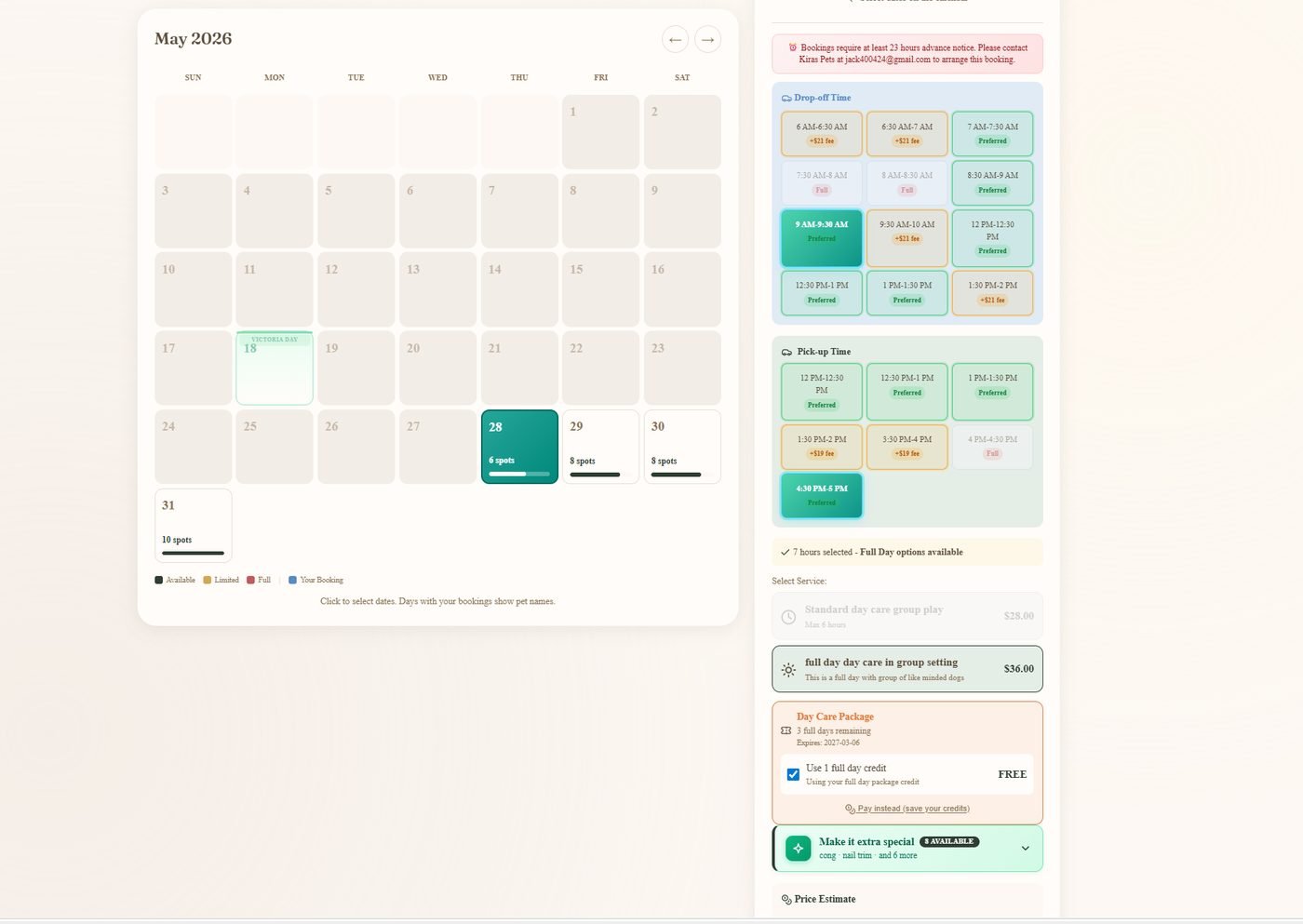
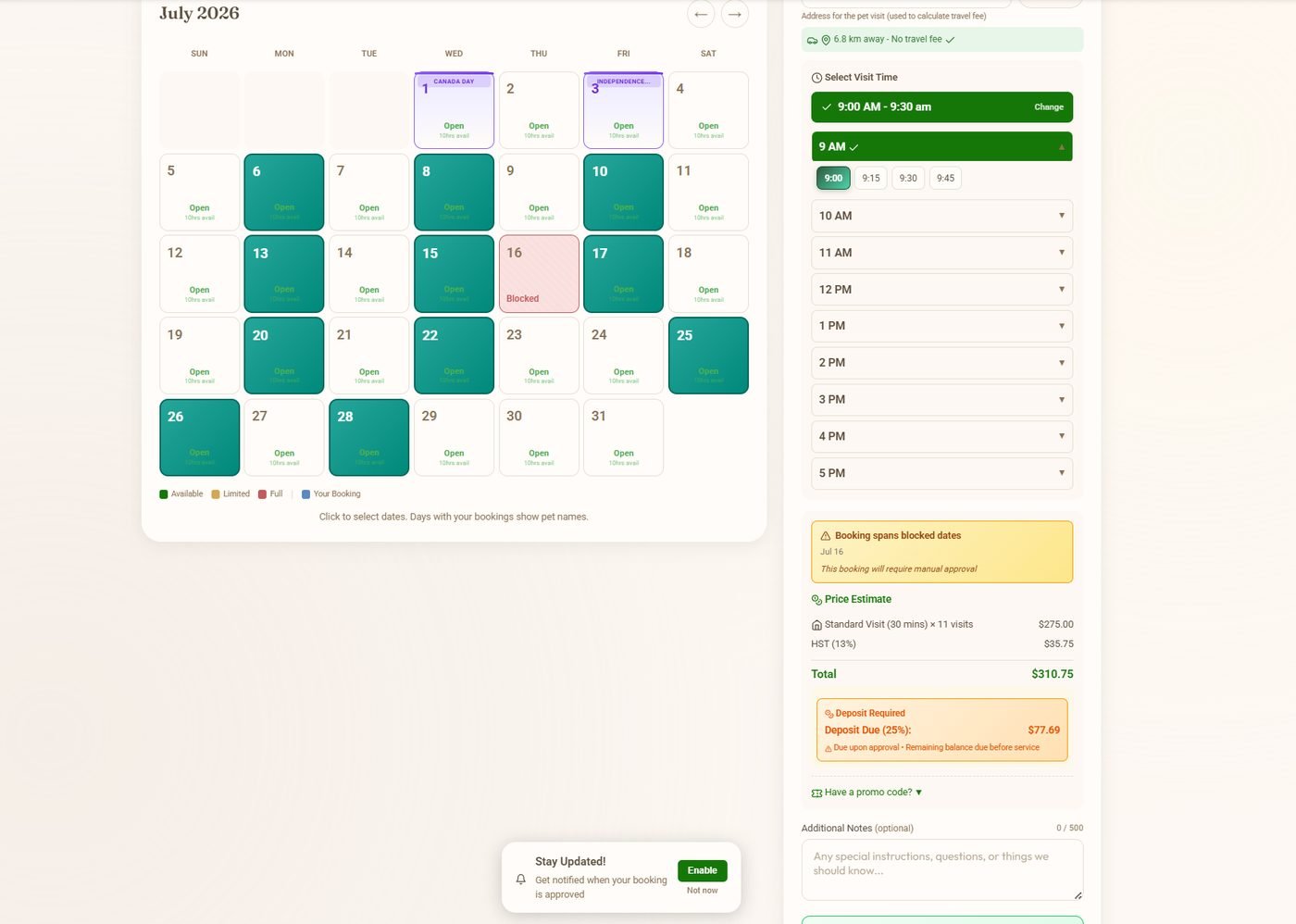
Invest in booking software early. A good platform handles online booking (so customers can book 24/7 without calling you), sends automated reminders (cutting your no-show rate), manages customer profiles and pet records, tracks vaccinations and waivers, and processes payments. This isn't a luxury — it's what lets you actually scale.
BooknBuddy was built for exactly this
Online booking, customer management, daily photo updates, digital waivers, payment processing — everything a new boarding business needs, for $39.99 CAD/month. No per-booking fees, no percentage cuts.
Start Your 30-Day Free Trial →Step 7: Get Your First Customers
You've got the space, the legal stuff is handled, your pricing is set, and your systems are ready. Now you need dogs to walk through the door.
Start With Your Network
Tell everyone you know. Friends, family, neighbours, people at the dog park, your vet, local pet stores. Word of mouth is still the most powerful marketing channel for local pet businesses. Offer your first few customers a discount or a free trial day to get testimonials and reviews.
Set Up Your Online Presence
At minimum, you need a Google Business Profile (this is free and gets you into Google Maps results), a Facebook page, and an Instagram account. Post photos of happy dogs regularly. Pet content performs incredibly well on social media — a photo of a goofy golden retriever in your play area is worth more than any ad copy you could write.
Ask for Reviews
After every successful stay, ask the pet parent to leave a Google review. Reviews are the single most important factor in local search rankings. A boarding business with 50 five-star reviews will dominate search results over one with 5 reviews, even if the latter has been around longer.
Partner Locally
Build relationships with local vets, groomers, pet stores, and dog trainers. Offer to refer customers to each other. Leave business cards or flyers at their locations. These partnerships are a reliable source of referrals that cost nothing.
Step 8: Focus on Retention
Getting a new customer costs five to ten times more than keeping an existing one. Once someone trusts you with their dog, your job is to make sure they never want to go anywhere else.
Send daily updates with photos during boarding stays. Follow up after pickup to ask how the dog settled back in. Remember their dog's name, their preferences, their birthday. Offer loyalty discounts for repeat customers. Make the booking process so easy that rebooking is effortless.
The boarding businesses that thrive long-term aren't the ones with the fanciest facilities. They're the ones where pet parents feel like their dog is being cared for by someone who genuinely knows and loves their animal. That emotional connection is your strongest competitive advantage, and no amount of marketing spend can replicate it.
Common Mistakes to Avoid
- Skipping insurance — One incident without coverage can bankrupt you. Don't risk it.
- Undercharging — Competing on price is a race to the bottom. Compete on quality.
- Doing everything manually — Invest in software early. The time you save compounds quickly.
- Ignoring online reviews — Your Google reviews are your most powerful marketing tool. Actively ask for them.
- Growing too fast — Start with a manageable number of dogs and scale up as you learn. Taking on more than you can safely handle puts animals at risk.
- Neglecting the customer experience — You're not just caring for dogs, you're serving pet parents. Their experience matters just as much.
The Bottom Line
Starting a dog boarding business is absolutely achievable, even with limited resources. The key is to start small, get the fundamentals right, and grow from there. Focus on providing exceptional care, making the booking experience seamless for your customers, and building a reputation that speaks for itself.
The pet care industry isn't slowing down. People love their animals and they need trustworthy, professional care for them. If that's something you can provide, there's a business waiting for you.
Related reading
- Best kennel software in Canada — CAD billing, GST/HST and e-Transfer
- Best pet boarding software in 2026 — the six features that actually matter
- How to manage a dog daycare business — capacity, scheduling and retention
- How to leave Rover and go independent — keep your clients and 100% of the revenue